Recovery And Healing Peptides
Shop recovery and healing peptides in Australia. Buy BPC-157, TB-500 and more — ≥99% HPLC verified, full CoA included, fast Australian dispatch.
Recovery and Healing Peptides Australia — Premium Research Peptides | Peptide Australia
Tissue repair, musculoskeletal regeneration, and injury recovery represent some of the most active and consequential areas of current peptide research. For researchers and medical professionals investigating the biological mechanisms behind soft tissue healing, tendon repair, angiogenesis, and cellular regeneration, healing peptides provide a class of research tools with remarkable target specificity and a growing body of supporting scientific literature. At Peptide Australia, our recovery and healing peptides category brings together the most analytically verified regenerative research compounds available to the Australian scientific community — each synthesised to a minimum purity of ≥99%, independently verified via HPLC and Mass Spectrometry, and dispatched from our Australian facility with full batch-specific Certificate of Analysis documentation.
Whether you are sourcing peptides for injury recovery, tendon repair research, or broad soft tissue regeneration studies, every compound in this category meets the rigorous analytical standards your research demands.
What Are Healing and Recovery Peptides?
Healing and recovery peptides are bioactive amino acid sequences studied for their ability to modulate the biological pathways involved in tissue repair, inflammation regulation, angiogenesis, and cellular regeneration. In a research context, these compounds are investigated for their interactions with growth factor receptors, cytokine signalling networks, actin polymerisation pathways, and extracellular matrix remodelling systems — the core molecular machinery that governs how damaged tissue is repaired and restored at a cellular level.
The best peptides for recovery research work through distinct and well-characterised mechanisms, allowing researchers to isolate specific aspects of the healing process for targeted experimental investigation. From gastric-derived pentadecapeptides that interact with growth hormone receptors and nitric oxide pathways, to thymosin beta-4 analogs that regulate actin dynamics and cell migration, the recovery peptides available through Peptide Australia cover the full mechanistic spectrum of regenerative biology.
Our Recovery and Healing Peptides Australia Range
BPC-157 — The Most Researched Peptide for Injury Recovery
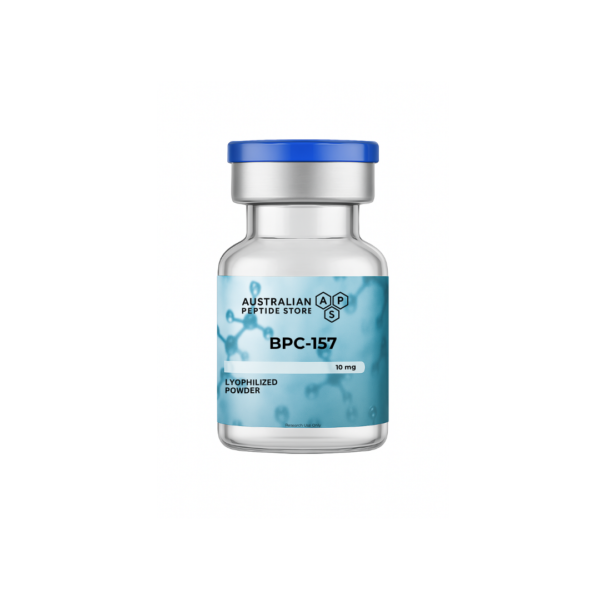
BPC-157 — Body Protection Compound 157 — is a gastric-derived synthetic pentadecapeptide composed of 15 amino acids and one of the most extensively studied peptides for injury recovery in the scientific literature. Originally isolated from human gastric juice, BPC-157 has been investigated across an exceptionally broad range of tissue repair models, with research examining its role in tendon healing, ligament repair, muscle regeneration, bone repair, and gastrointestinal tissue restoration.
The mechanisms through which BPC-157 is studied are numerous and interconnected. Research has investigated its interactions with the nitric oxide system, its upregulation of growth hormone receptor expression in tendon fibroblasts, its promotion of angiogenesis through VEGF pathway modulation, and its influence on the FAK-paxillin pathway involved in cell survival and migration. For researchers investigating peptides for healing tendons specifically, BPC-157 is the most documented and widely referenced compound in the field.
Peptide Australia supplies BPC-157 to Australian researchers in lyophilised, vacuum-sealed vials verified to ≥99% HPLC purity with full Mass Spectrometry identity confirmation and batch-specific CoA documentation — providing the analytical certainty that longitudinal injury recovery research demands.
TB-500 — Thymosin Beta-4 Analog for Tissue Repair Research
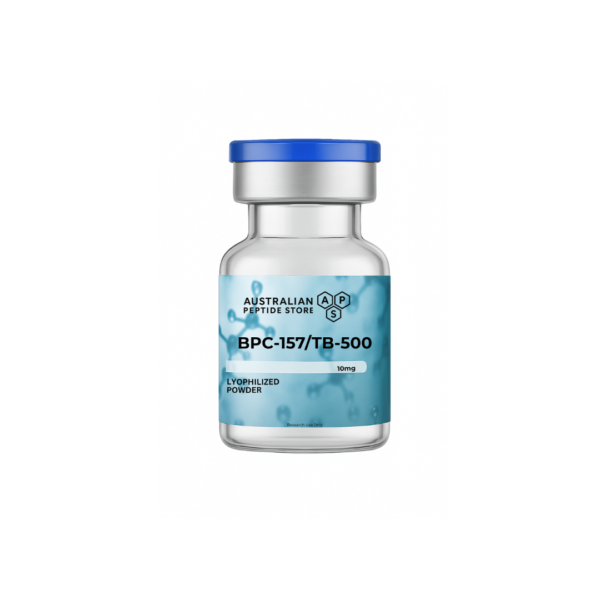
TB-500 is a synthetic analog of Thymosin Beta-4, an endogenous peptide found in virtually all human and animal cells and studied extensively for its role in actin regulation, cell migration, and tissue repair. The specific fragment of Thymosin Beta-4 represented by TB-500 — the actin-binding domain — is investigated for its ability to promote the upregulation of cell-building proteins, stimulate cell migration to sites of injury, and reduce inflammation in damaged tissue models.
For researchers investigating the cellular mechanics of wound healing, muscle repair, and connective tissue regeneration, TB-500 provides a high-specificity research tool targeting the actin polymerisation pathways that are fundamental to cell motility and tissue reconstruction. Research into TB-500 has examined its effects across multiple tissue types including cardiac muscle, skeletal muscle, skin, and neural tissue — making it one of the most versatile recovery peptides available for broad regenerative biology research.
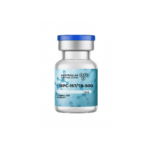
Peptide Australia also supplies TB-500 Fragment (17-23) — the isolated active sequence of the full TB-500 molecule — for researchers requiring a more targeted investigation of the actin-binding mechanism specifically.
BPC-157 & GHK-Cu Combination — Synergistic Regenerative Research
For researchers investigating the potential synergistic effects of combining regenerative peptide compounds, Peptide Australia supplies a BPC-157 and GHK-Cu combination vial — providing both the most studied peptide for injury recovery and the most extensively documented copper peptide bioregulator in a single research formulation.
GHK-Cu — glycyl-L-histidyl-L-lysine copper complex — is studied for its role in stimulating collagen and glycosaminoglycan synthesis, promoting fibroblast activity, and modulating the expression of genes involved in tissue remodelling and antioxidant defence. The combination of BPC-157's growth factor receptor interactions and GHK-Cu's collagen synthesis stimulation represents a compelling research protocol for studies investigating multi-pathway regenerative mechanisms.
KLOW Combination Set — Advanced Multi-Peptide Recovery Research
For researchers requiring a comprehensive multi-compound recovery research protocol, Peptide Australia supplies the KLOW combination set — a four-peptide formulation comprising KPV, GHK-Cu, TB-500, and BPC-157. This combination brings together compounds studied across inflammation modulation, actin regulation, collagen synthesis, and growth factor pathway interactions — providing a broad-spectrum research tool for advanced regenerative biology investigations.
Peptides for Injury Recovery — Selecting the Right Compound
Selecting the most appropriate recovery peptide for your research depends on the specific tissue type, biological mechanism, and experimental model your study is designed to address. At Peptide Australia, we recommend researchers consider the following when selecting compounds from our healing peptides Australia range:
Tendon & Ligament Research: BPC-157 is the most extensively studied peptide for healing tendons and ligament repair in laboratory models, with a substantial body of literature examining its effects on fibroblast proliferation, collagen organisation, and growth hormone receptor expression in connective tissue.
Muscle & Soft Tissue Repair: TB-500 and its active fragment (17-23) are the most relevant compounds for researchers investigating actin-mediated cell migration, muscle fibre regeneration, and the cellular mechanics of soft tissue healing.
Multi-Tissue Regeneration: The BPC-157 and GHK-Cu combination, or the KLOW four-peptide set, are most appropriate for researchers investigating synergistic or multi-pathway regenerative mechanisms across multiple tissue systems simultaneously.
Collagen & Extracellular Matrix Research: GHK-Cu is the most appropriate standalone compound for researchers focused specifically on collagen synthesis, matrix metalloproteinase regulation, and extracellular matrix remodelling pathways.
If you require assistance identifying the right peptide for recovery research based on your specific experimental requirements, our technical support team is available to provide compound-specific guidance, solubility data, and reconstitution protocols.
Why Buy Recovery and Healing Peptides in Australia Through Peptide Australia?
For researchers whose experimental outcomes depend on the molecular integrity of the compounds they use, the quality of your peptide supplier directly determines the reliability of your data. Peptide Australia was established to provide the Australian research community with a supply partner that holds itself to the highest analytical standards in the local market.
Every recovery and healing peptide we supply is subject to the following non-negotiable standards:
≥99% HPLC Purity Verified: Every batch is independently tested by accredited third-party laboratories to confirm a minimum purity of ≥99%. Chromatogram data is available for researcher review.
Mass Spectrometry Identity Confirmed: Molecular weight and amino acid sequence are confirmed via MS for every batch — eliminating the risk of mislabelled or incorrectly synthesised compounds reaching your laboratory.
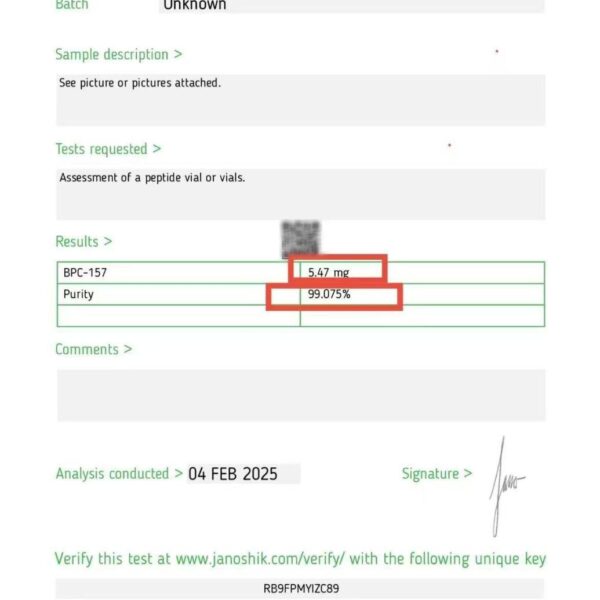
Batch-Specific Certificate of Analysis: Every order is accompanied by a CoA corresponding to the exact production batch your vials are sourced from — not a generic document applied across multiple batches.
Australian Stock & Dispatch: All recovery and healing peptides are held in stock and dispatched from within Australia — ensuring faster delivery, maintained cold-chain integrity, and no customs-related delays.
Technical Research Support: Our team provides direct access to solubility data, reconstitution protocols, and compound-specific technical guidance for all healing peptides in our catalogue.
Storage & Handling — Recovery and Healing Peptides
Long-Term Storage: Store lyophilised recovery peptides at -20°C in a sealed, moisture-free environment. Avoid repeated freeze-thaw cycles.
Short-Term Storage: For compounds in active research use within one to three months, refrigeration at 2–8°C is acceptable.
Reconstitution: Reconstitute using bacteriostatic water or the solvent specified in the compound's technical data sheet. Add solvent slowly and rotate gently — do not vortex.
Post-Reconstitution: Store reconstituted peptides at 2–8°C, away from direct light, and use within 14 to 21 days.
Frequently Asked Questions — Recovery and Healing Peptides Australia
What are the best peptides for injury recovery available in Australia? BPC-157 is the most extensively studied peptide for injury recovery across tendon, ligament, muscle, and gastrointestinal tissue models. TB-500 is the most relevant compound for actin-mediated soft tissue repair and cell migration research. For multi-pathway investigations, our BPC-157 and GHK-Cu combination or KLOW set provide broad-spectrum regenerative research coverage.
What are the best peptides for healing tendons? BPC-157 is the most documented peptide for healing tendons in the research literature, with studies examining its effects on tendon fibroblast proliferation, collagen fibre organisation, and growth hormone receptor expression in connective tissue models. TB-500 is also widely studied in tendon repair contexts for its actin-regulatory and cell migration-promoting properties.
Do you ship recovery peptides across Australia? Yes. We ship all recovery and healing research peptides to research facilities, universities, and medical institutions across Australia. All orders are dispatched from within Australia with full tracking provided.
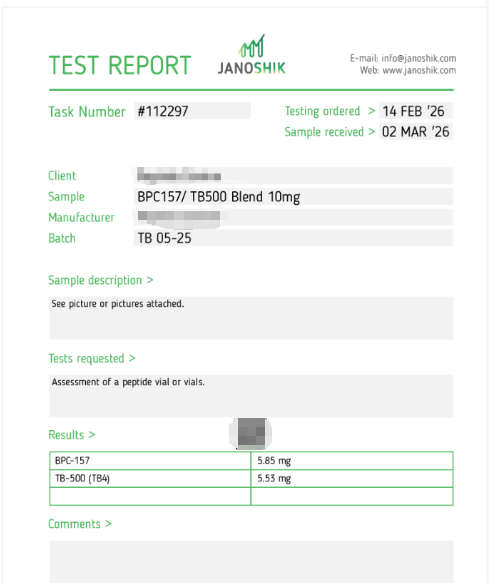
What documentation comes with my order? Every order includes a batch-specific Certificate of Analysis documenting compound name, batch number, HPLC purity result, and Mass Spectrometry identity confirmation — provided as standard with every order.
Can I order recovery peptides in bulk for institutional research? Yes. Peptide Australia offers tiered pricing for large-volume orders and custom sourcing for institutional research programmes. Contact our team to discuss your requirements.
Shop Recovery and Healing Peptides Australia
Peptide Australia is your trusted Australian source for premium, analytically verified recovery and healing research peptides. Every compound in this category is synthesised to ≥99% purity, independently tested, and dispatched from within Australia with complete documentation.
Peptide Australia — Premium Recovery and Healing Peptides. Verified Purity. Australian Supply.