
Blog
Impurity Limits for Peptides That Matter

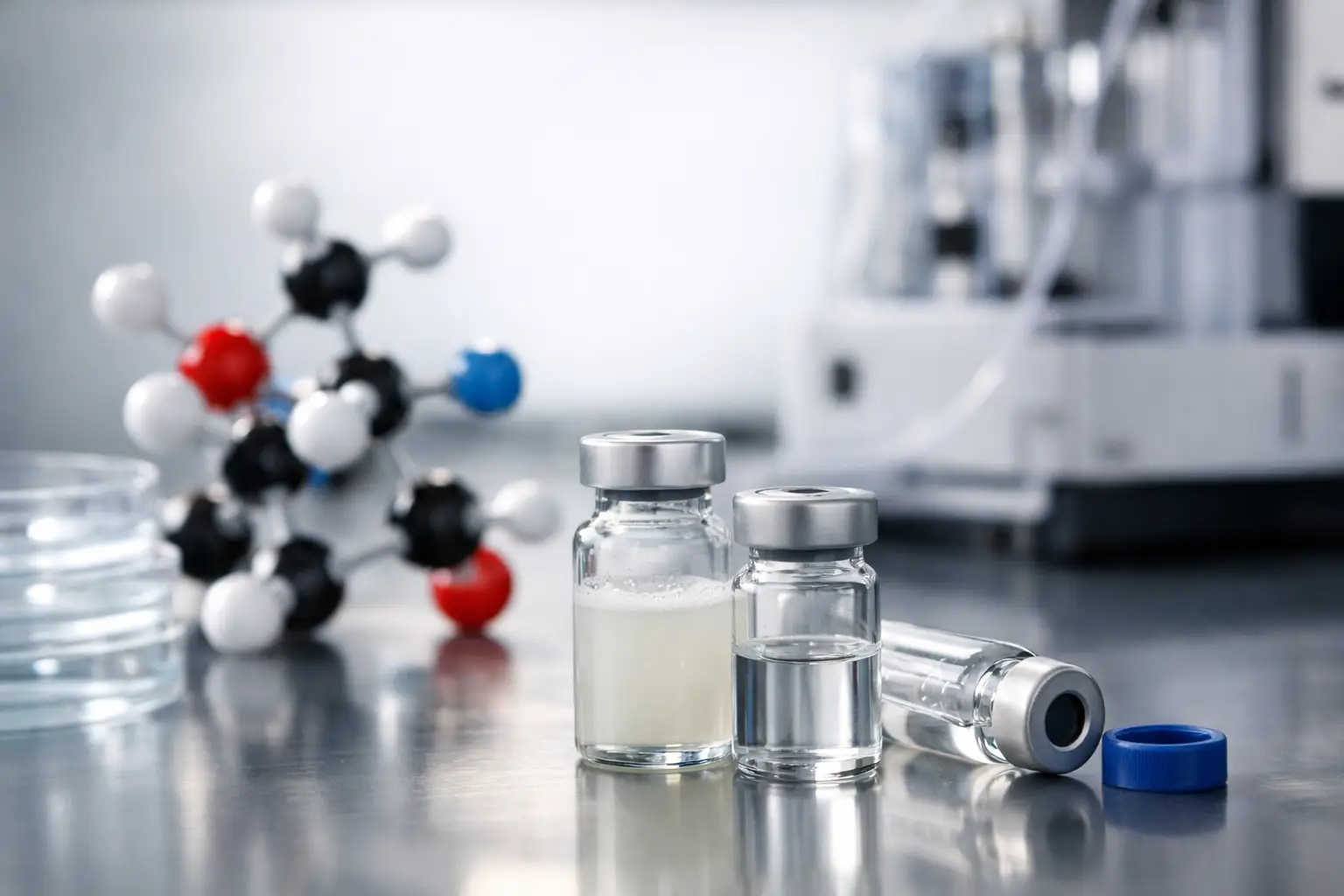
A peptide can clear an assay on paper and still compromise the work if the impurity profile is poorly controlled. That is why impurity limits for peptides are not a paperwork exercise. They sit at the centre of batch integrity, analytical confidence and experimental reproducibility.
For serious research procurement, the headline purity figure is only the start. A certificate stating 99% purity may look decisive, but the remaining 1% matters when those residual species include truncated sequences, deletion peptides, oxidised forms, counterion variation, residual solvents or synthesis-related by-products. The question is not simply whether impurities exist. The real question is which impurities are present, at what level, and whether the testing strategy is sensitive enough to characterise them properly.
Why impurity limits for peptides are not one-size-fits-all
Peptide impurity limits depend on the intended research context, the sequence itself and the analytical methods used to verify the material. A short, structurally simple peptide with limited labile residues will usually present a different impurity risk profile from a longer sequence containing methionine, cysteine, tryptophan or complex modifications. The same nominal purity threshold cannot be interpreted identically across both.
This is where lower-tier vendors often fail. They reduce quality assessment to a single purity percentage without showing chromatographic resolution, molecular identity confirmation or batch-specific analytical context. That approach obscures whether the impurity burden is chemically trivial or experimentally disruptive.
In practice, acceptable impurity limits are tied to three issues. First, whether the principal peak genuinely represents the target sequence. Second, whether non-target species are likely to alter biological readouts. Third, whether batch-to-batch consistency is tight enough to support reproducible outcomes across repeated studies.
What counts as an impurity in peptide materials
In peptide manufacturing, an impurity is any component other than the intended target peptide and its defined acceptable form. That sounds straightforward, but the category is broader than many buyers assume.
The most common impurities arise during solid-phase peptide synthesis and subsequent handling. These include deletion sequences from incomplete coupling, truncated fragments, sequence isomers, protecting-group remnants, oxidised variants, deamidated products and residual reagents from cleavage or purification. Depending on the salt form and finishing process, there can also be water content variation, trifluoroacetate or acetate counterion differences, and residual solvent traces.
Not every impurity carries the same analytical or biological significance. A low-level salt or moisture variation may affect weight-normalised calculations more than receptor interaction. By contrast, a closely related deletion peptide can survive purification, co-elute under weak analytical conditions and materially affect assay behaviour. This is why impurity assessment must be chemical, not just numerical.
The limits that matter most in procurement
When laboratories discuss impurity limits for peptides, they are usually considering several overlapping thresholds rather than one universal cut-off. The first is overall purity, commonly measured by analytical HPLC. For professional procurement, 95% may be accepted in some exploratory settings, but it is not the standard most advanced buyers want for sensitive or comparative research. Once experimental work depends on clean signalling interpretation and repeatable dose-response relationships, 98% and above becomes more defensible, while 99% or higher provides a stronger quality position when supported by credible analytics.
The second threshold is the level of any single unknown impurity. A batch with 99% area purity but one unresolved 0.8% unknown species warrants closer scrutiny than a batch with several fully characterised minor traces. The third is identity confirmation. Purity alone does not establish that the major peak is the correct peptide. Mass spectrometry is therefore non-negotiable if the goal is confidence rather than assumption.
Residual solvents and synthesis-related contaminants also require limits, though they are often underreported in the retail peptide market. Their relevance depends on formulation, lyophilisation controls and the level of manufacturing discipline. High-end sourcing should treat these as controllable process variables, not incidental background.
Why HPLC purity can mislead without context
Analytical HPLC is indispensable, but it is not infallible. A chromatogram only shows what the method is capable of resolving under the chosen conditions. If the mobile phase, column chemistry or gradient is poorly optimised, closely related impurities may collapse into the main peak or appear deceptively minor.
That is why experienced buyers do not rely on a purity percentage in isolation. They look for peak shape, baseline separation, integration quality and whether the method appears fit for the peptide class in question. They also expect batch-specific documentation rather than generic template data.
An HPLC result is strongest when paired with mass spectrometry in a dual-verification approach. HPLC estimates compositional purity. MS confirms molecular mass and helps verify that the principal component aligns with the intended sequence. Together, these methods materially improve confidence in identity and impurity control.
Batch consistency matters more than a single clean report
One analytically strong batch is not enough if the next three vary. For laboratories running sequential studies or cross-comparing peptide lots, consistency is often more valuable than a one-off impressive certificate. Impurity limits therefore need to be understood as part of a manufacturing system, not just a test result.
Reliable suppliers control impurity formation at multiple points – coupling efficiency during synthesis, cleavage conditions, purification stringency, lyophilisation parameters, storage controls and independent release testing. Each stage affects the final impurity burden. Where process discipline is weak, impurity variability increases even if an occasional batch appears acceptable.
This is the practical difference between commodity sourcing and laboratory-grade sourcing. The former sells a percentage. The latter delivers reproducibility backed by traceability.
Setting realistic impurity expectations by peptide type
Not all peptides tolerate the same impurity specification with equal ease. Sequences with oxidation-prone residues, disulphide constraints or complex modifications may demand tighter handling controls and more careful interpretation of analytical data. Longer peptides also tend to carry greater synthesis complexity and therefore a higher theoretical impurity risk.
That does not mean impurity limits should be relaxed casually. It means the supporting documentation must become more rigorous as complexity rises. A supplier claiming exceptional purity on a difficult sequence without clear HPLC and MS evidence is asking the buyer to accept risk on trust alone.
For routine high-value research, the most defensible procurement position is to require a clearly stated purity threshold, independent analytical verification and batch-linked CoA documentation. Buy Peptides Australia, for example, positions its release standard around a minimum 99% purity with preparative HPLC purification and independent analytical confirmation. That kind of specification is not marketing decoration. It is what reduces uncertainty before the material reaches the bench.
How buyers should assess impurity risk before purchase
A rigorous procurement review starts by separating identity, purity and process control. These are related, but not interchangeable. If a vendor only provides a label claim and no batch-specific analytical record, the impurity risk is already elevated.
Ask whether the CoA is batch-linked, whether analytical HPLC and MS were both performed, and whether the stated purity reflects the supplied lot rather than a historical reference sample. Review whether the chromatogram appears professionally integrated and whether the molecular mass aligns with the expected sequence. Where the peptide is especially sensitive or high value, it is also reasonable to ask about synthesis method, purification approach and storage recommendations.
The trade-off is simple. Lower-cost material may appear economical at the point of purchase, but impurity-related assay noise, failed replication and questionable identity quickly become more expensive than paying for verified quality upfront.
The compliance view: impurities are a data quality problem
In a research-only environment, impurity control is often discussed as a quality issue. More precisely, it is a data quality issue. Impurities can alter receptor binding, confound metabolic or signalling pathways, affect apparent stability and skew interpretations tied to cellular senescence, intracellular energy efficiency or synaptic plasticity. Even low-level contamination can become consequential in tightly calibrated in vitro work.
That is why serious buyers should treat impurity limits for peptides as part of experimental design. The cleaner and better characterised the starting material, the stronger the downstream confidence in observed effects. When the source material is ambiguous, every result inherits that ambiguity.
The most useful standard is not the cheapest batch or the loudest purity claim. It is a documented, independently verified batch with impurity limits strict enough to protect the integrity of the work. If the supplier cannot show that standard clearly, the risk has not been removed – only hidden.
The best procurement decisions are usually the quiet ones: fewer surprises, cleaner chromatograms and results you do not need to second-guess.
One thought on “Impurity Limits for Peptides That Matter”