
Blog
Why High Purity Research Peptides Matter

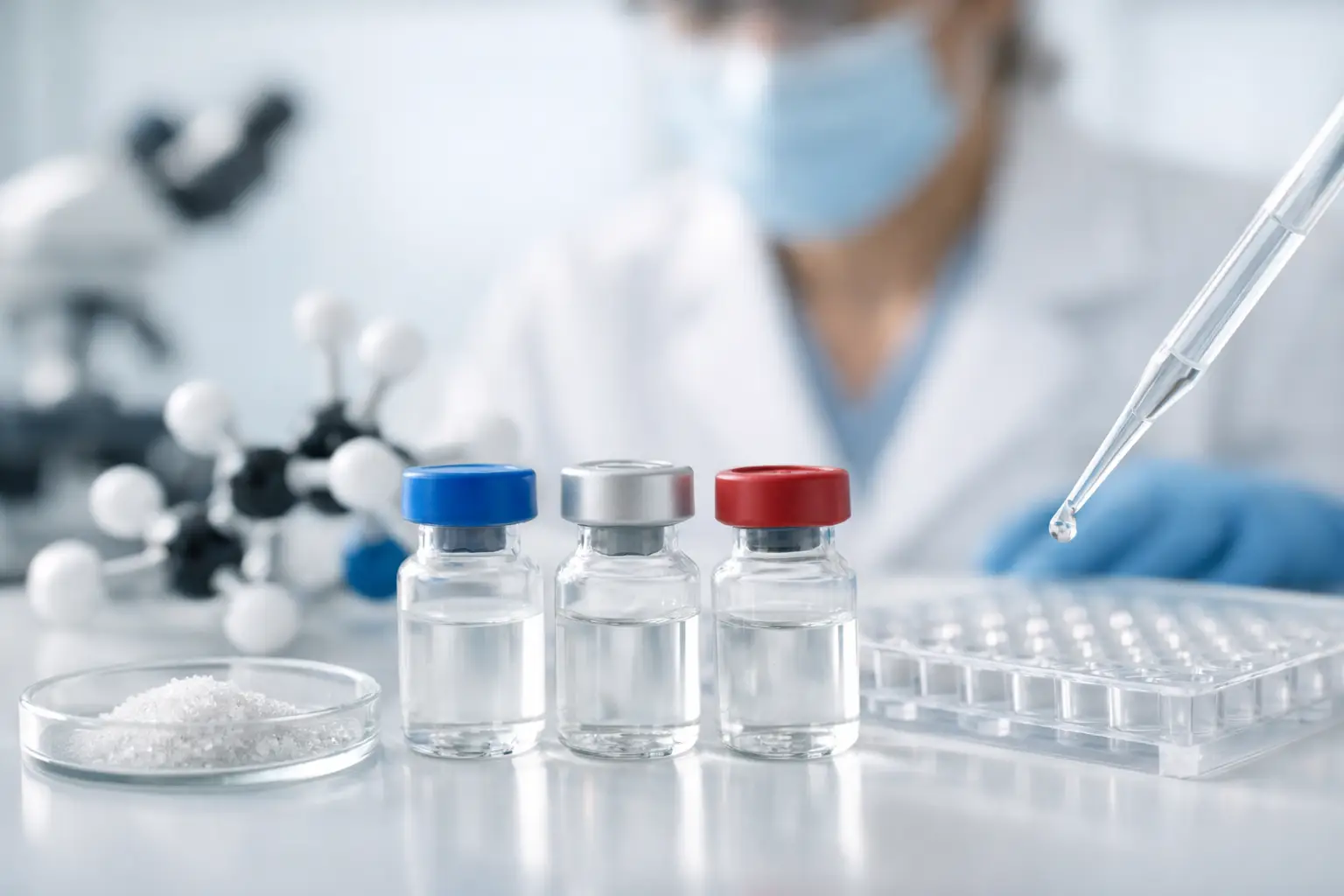
A peptide that arrives with a label and a promise is not the same thing as a peptide that arrives with identity confirmation, chromatographic separation data and batch-level traceability. In serious laboratory settings, high purity research peptides are not a marketing preference. They are a control measure against compromised data, avoidable variability and wasted experimental cycles.
For researchers working with signalling pathways, metabolic regulation, tissue repair models or neuroactive compounds, purity has direct consequences. A low-confidence input does not stay contained at procurement. It propagates through study design, dosing assumptions, assay interpretation and reproducibility. When the compound itself is uncertain, every downstream conclusion becomes harder to defend.
What high purity research peptides actually mean
The phrase is often used too loosely. In a laboratory procurement context, high purity should point to a defined analytical standard rather than a vague quality claim. That standard begins with synthesis quality, but it does not end there.
A credible high-purity peptide is typically produced through solid-phase peptide synthesis, then purified by preparative HPLC to remove truncations, deletion sequences, synthesis by-products and other closely related impurities. That material should then be verified through analytical HPLC and mass spectrometry, ideally as part of a dual-verification approach that confirms both chromatographic purity and molecular identity.
Purity percentage matters, but only when it is attached to a documented method. A stated threshold of 99 per cent or better carries weight when backed by a certificate of analysis, test conditions and batch-specific reporting. Without that, the number is just packaging copy.
Why purity changes the quality of the data
Advanced buyers already understand that peptides are not interchangeable with small-molecule reagents. Sequence-specific activity, susceptibility to degradation and sensitivity to handling all make peptide quality a central variable. The question is not whether purity matters. The real question is how much experimental noise can be traced back to a poor starting material.
In cell-based work, impurity profiles can alter receptor interaction patterns, skew apparent potency or introduce off-target effects that look like meaningful signal. In metabolic research, that may distort readouts tied to appetite regulation, insulin signalling or intracellular energy efficiency. In recovery and regeneration models, contamination can complicate interpretation around inflammation, collagen dynamics or angiogenic response. In cognitive research, where synaptic plasticity and neurochemical signalling are already complex, poor peptide integrity can turn subtle findings into statistical clutter.
This becomes even more significant when studies compare batches, replicate historical work or attempt to narrow mechanism. If one lot contains elevated synthesis remnants or unidentified fragments, the issue is not just lower performance. It is false confidence in conclusions drawn from material that was never analytically clean enough to support them.
The hidden cost of lower-grade peptide sourcing
The cheapest vial is often the most expensive reagent in the project. That sounds obvious, yet the market still rewards vendors who compete on price while treating documentation as optional.
The direct cost of impure material is only the beginning. There is also assay repetition, investigator time, consumable waste, delayed milestones and damaged confidence in internal data. For commercial laboratories and medically affiliated buyers, there is an additional procurement risk. If source quality cannot be defended, neither can the purchasing decision.
This is where many imported commodity peptides fail scrutiny. Labels may match demand trends, but batch consistency is weak, storage history is unclear and independent verification is absent. A product can look acceptable at a glance and still introduce enough lot-to-lot variation to compromise reproducibility. For any research program built on comparative analysis, that is an unacceptable fragility.
How to evaluate high purity research peptides properly
A serious evaluation process starts with verification, not catalogue breadth. Broad product listings mean very little if the analytical foundation is thin.
The first point to assess is manufacturing discipline. Solid-phase peptide synthesis remains the expected baseline for controlled assembly, particularly where sequence fidelity matters. From there, purification methodology should be explicit. Preparative HPLC is not a premium extra. It is the process that separates usable research material from a crude synthesis output.
Next comes independent confirmation. Analytical HPLC should show a clean dominant peak under stated conditions, while mass spectrometry should confirm expected molecular mass. Used together, these methods reduce the chance that a product is merely similar to the target compound rather than the target compound itself.
Documentation also needs scrutiny. A certificate of analysis should be batch specific, not generic. It should indicate purity, identity testing and ideally the lot reference that ties the physical product to the reported data. If a vendor cannot produce coherent batch documentation, the claimed standard is not reliable enough for serious procurement.
Finally, consider fulfilment and storage controls. Australian dispatch is not only a convenience issue. It can reduce transit uncertainty, shorten exposure windows and improve chain-of-custody confidence. For temperature-sensitive or tightly scheduled research workflows, that matters more than many buyers admit.
Purity is only one part of batch integrity
A common procurement mistake is to treat purity as the whole quality story. It is essential, but not sufficient on its own.
Two batches can each test at high purity and still differ in ways that affect use. Counter-ion form, residual solvents, moisture content, lyophilisation quality and handling conditions all influence stability and reconstitution behaviour. That is why sophisticated buyers look beyond the headline percentage. They want a sourcing standard that reflects full batch integrity, not a single attractive metric.
This is especially relevant for compounds used across peptide categories with different research demands. GLP-1 pathway compounds, healing and recovery peptides, cognitive peptides, hormonal optimisation compounds and skin-regeneration sequences do not all present the same stability profile or handling sensitivity. A disciplined supplier accounts for those differences instead of treating every peptide as a commodity powder in an identical vial.
Why third-party verification carries more weight
Self-reported purity is better than no reporting, but independent testing carries far greater evidentiary value. In a market where mislabelling and under-validated material remain persistent concerns, third-party verification helps separate analytical quality from self-issued reassurance.
For laboratory buyers, this matters at both technical and operational levels. Technically, external confirmation improves confidence that chromatographic and mass data reflect the actual batch supplied. Operationally, it supports internal compliance, purchasing justification and audit readiness. When procurement teams or principal investigators ask why a supplier was selected, independent verification is one of the strongest answers available.
This is the standard that underpins premium peptide sourcing. Not more hype. More proof.
High purity research peptides in an Australian procurement context
Australian researchers face a practical problem that is often understated – distance amplifies sourcing risk. Longer supply chains increase the odds of temperature excursions, fulfilment delays and inconsistent batch substitution. Overseas vendors may offer lower list pricing, but that advantage narrows quickly when delays, customs uncertainty and documentation gaps enter the equation.
For that reason, local fulfilment paired with laboratory-grade validation is not a minor convenience. It is a strategic procurement advantage. A supplier such as Buy Peptides Australia positions around that exact requirement: high-purity, independently verified research compounds dispatched from within Australia with a compliance-focused research-use framework.
That combination is particularly relevant for advanced purchasers who do not need introductory education on compounds like BPC-157, TB-500, CJC-1295 or IGF-related peptides. They need confidence that what is ordered is what is received, and that the supporting analytical record is strong enough to protect reproducibility.
The standard worth paying for
There is always a price conversation in the peptide category. The better question is what standard the price is actually buying. If the answer is uncertain identity, vague purity claims and weak traceability, the lower cost is a false economy.
High purity research peptides justify their premium when they are supported by disciplined synthesis, preparative purification, analytical HPLC, mass spectrometry and batch-specific documentation. That is the threshold at which procurement starts supporting the science rather than undermining it.
For laboratories that value reproducibility, traceability and defensible results, purity should never be treated as a cosmetic specification. It is one of the clearest signals of whether a supplier understands the difference between selling peptides and supplying research-grade material fit for serious work.
The smartest buying decision is usually the one that removes doubt before the experiment begins.
3 thoughts on “Why High Purity Research Peptides Matter”